

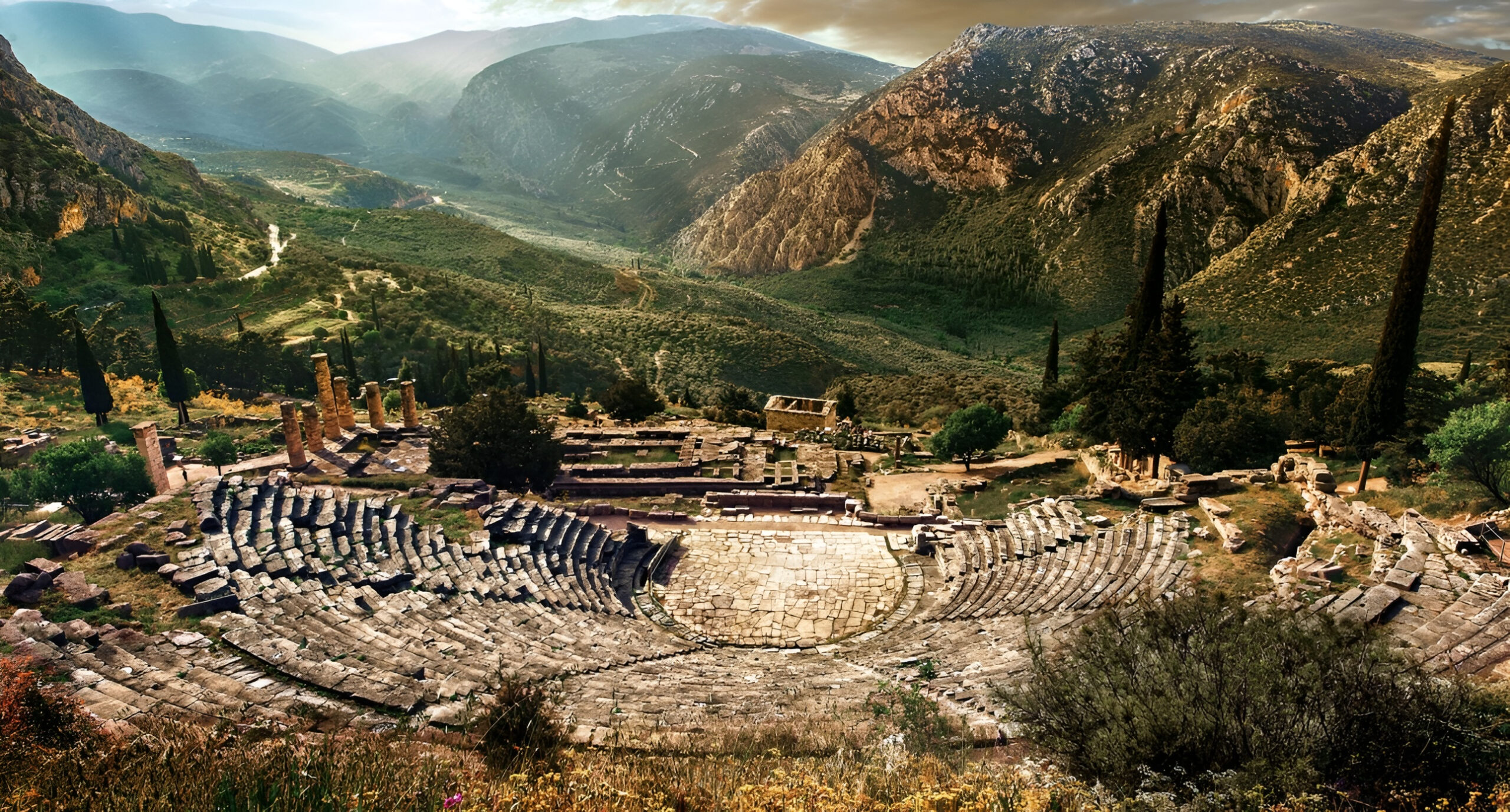
Delphi – The Sacred Center of the Ancient World
The Archaeological Site of Delphi is one of the most important cultural and historical landmarks in Greece, recognized as a UNESCO World Heritage Site. Nestled on the slopes of Mount Parnassus, Delphi was once considered the “navel of the world” in ancient Greek mythology. In antiquity, Delphi was home to the famous Oracle of Apollo, where pilgrims from all over the ancient world would come seeking guidance from the god Apollo through the priestess Pythia. This spiritual center played a crucial role in political decisions, colonization and major events throughout Greek history. Visitors today can explore the impressive ruins that reflect Delphi’s former glory. Highlights include the Temple of Apollo, where the oracle delivered her prophecies, the ancient theater with breathtaking views of the valley below and the well-preserved stadium that once hosted the Pythian Games, one of the most important athletic competitions of ancient Greece. A visit to the Delphi Archaeological Museum is also essential, as it houses remarkable artifacts discovered at the site. Among them is the world- renowned Charioteer of Delphi, a masterpiece of ancient Greek bronze sculpture, along with statues, offerings and architectural elements that bring the ancient sanctuary to life. Surrounded by dramatic landscapes of mountains and olive groves stretching toward the Gulf of Corinth, Delphi offers not only historical significance but also stunning natural beauty, making it a truly unforgettable destination.


Arachova – The Cosmopolitan Mountain Village
The picturesque village of Arachova is one of the most popular mountain destinations in Greece, beautifully situated on the slopes of Mount Parnassus. Known for its unique blend of traditional charm and modern lifestyle, Arachova offers a vibrant atmosphere all year round. Often referred to as the “Mykonos of the mountains,” Arachova is famous for its stone-built houses, narrow cobblestone streets and breathtaking views of the surrounding landscape. The village has a long history and strong cultural identity. It was in Arachova that Georgios Karaiskakis (1780-1827) defeated the Turkish army led by Moustafabei in November 1826. Local traditions, festivals and craftsmanship still play an important role in daily life. Visitors can stroll through its lively streets, explore boutique shops and discover high-quality local products such as handmade textiles, carpets and traditional delicacies. Arachova is also well known for its gastronomy, offering a wide selection of traditional tavernas and modern restaurants where you can enjoy authentic Greek cuisine and local specialties. In winter, Arachova becomes a popular base for visitors heading to the nearby ski center of Mount Parnassus, while in warmer months it serves as a relaxing stop with cool mountain air and scenic surroundings. Combining elegance, tradition, and natural beauty, Arachova is the perfect place to unwind, enjoy a delicious meal and experience authentic Greek mountain culture.


Hosios Loukas Monastery – A Byzantine Masterpiece
The historic Hosios Loukas Monastery is one of the most important Byzantine
monuments in Greece and a designated UNESCO World Heritage Site. Nestled on the slopes of Mount Helicon, this remarkable monastery offers a unique glimpse into the spiritual and artistic heritage of the Byzantine Empire. Founded in the 10th century, the monastery is dedicated to Saint Luke the Stiriote (Hosios Loukas), a hermit known for his piety and miraculous abilities. It became an important religious center and pilgrimage site, attracting visitors from across the region. The complex is renowned for its exceptional architecture and stunning interior decoration. Visitors can admire two main churches: the Church of Panagia and the Katholikon, both showcasing exquisite Byzantine design. Inside, the monastery is adorned with magnificent mosaics, intricate marble work and beautifully preserved frescoes, considered among the finest examples of Middle Byzantine art. One of the highlights is the crypt, where the tomb of Hosios Loukas is located, adding to the spiritual significance of the site. The peaceful surroundings, combined with the monastery’s rich history and artistic beauty, create a truly unique and serene atmosphere. A visit to Hosios Loukas Monastery offers a deeper understanding of Byzantine culture, religion and artistry, making it a meaningful and enriching stop during your journey through central Greece.