

Tucked at the foot of Lycabettus Hill, Plateia Dexamenis is one of those Athens secrets hiding in plain sight. Poets and Nobel laureates once lingered here over coffee. A Roman emperor built the cistern that gave the square its name. And today, on warm evenings, it’s the kind of place where you order fried calamari and forget entirely that you’re in the middle of a capital city.
The Story Beneath Your Feet
A Roman Emperor's Gift to Athens
The square takes its name — dexameni means cistern in Greek — from a remarkable piece of Roman engineering built in the 2nd century AD. Emperor Hadrian, famous for his love of Greek culture, commissioned an aqueduct to solve Athens’ chronic water shortage. The Hadrianic Aqueduct ran 20 kilometres from the foothills of Parnitha and Penteli all the way to two cisterns in what is now Kolonaki.
This isn’t just an archaeological footnote. The aqueduct is considered the finest ancient water system ever built for Athens, and — remarkably — it is the only Roman aqueduct of its kind in Europe that still carries water to this day. The cistern itself, with its vaulted ceiling resting on two rows of stone pillars, was built from cut stone and solid brick, its interior originally finished in layers of coloured plaster.
Over the centuries the aqueduct fell into disrepair during Ottoman rule, and Athens returned to drawing water from wells. Then, in 1847, the forgotten system was rediscovered. Restoration began almost immediately, and in 1870 — during the tenure of Mayor Panagis Kyriakos — engineer Ioannis Genissarlis excavating for a new cistern found the ancient one buried beneath a spring in the square. A new cistern measuring 14.5 by 26.5 metres was built over the Roman ruins, followed by a second, larger one alongside it. Together they held around 2,200 cubic metres of water and served the city until 1940.
The Literary Café
Where Poets Came to Think
From the late 19th century through the mid-20th, the old café beside the Roman cistern was one of Athens’ most celebrated literary meeting points. Writers such as Alexandros Papadiamantis, Kostas Varnalis, Angelos Sikelianos and Yiannis Vlachogiannis were regulars, spending long hours writing or talking beneath the poplars.
The café’s reputation was captured in a famously irreverent description attributed to Papadiamantis himself, who called it a “nursery school, bar and old people’s home” — a characterisation the current management has embraced so wholeheartedly that they’ve printed it on the menus.
Among the last of the literary regulars was Odysseas Elytis, the Nobel Prize-winning poet. His statue now stands in the square — a quiet tribute to an era when these stone tables hosted some of the most important voices in modern Greek literature.
”Up there I found, along with the tall trees, the clean air, the sun and the distant view of the Saronic Gulf — which intoxicated me with its serenity and its glittering — my better self…
The Dexameni then had all its natural beauty. It had no marble stairs, it wasn't squeezed into corsets of stone walls and iron railings. It rejoiced in its height and its freedom, far from the profane city.
KOSTAS VARNALISFROM HIS MEMOIRS
Dexameni Today
Ouzaki, Cinema and a Children's Playground
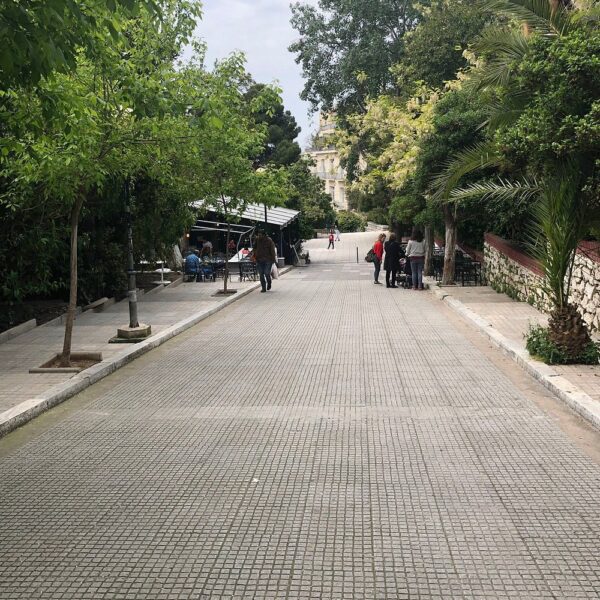
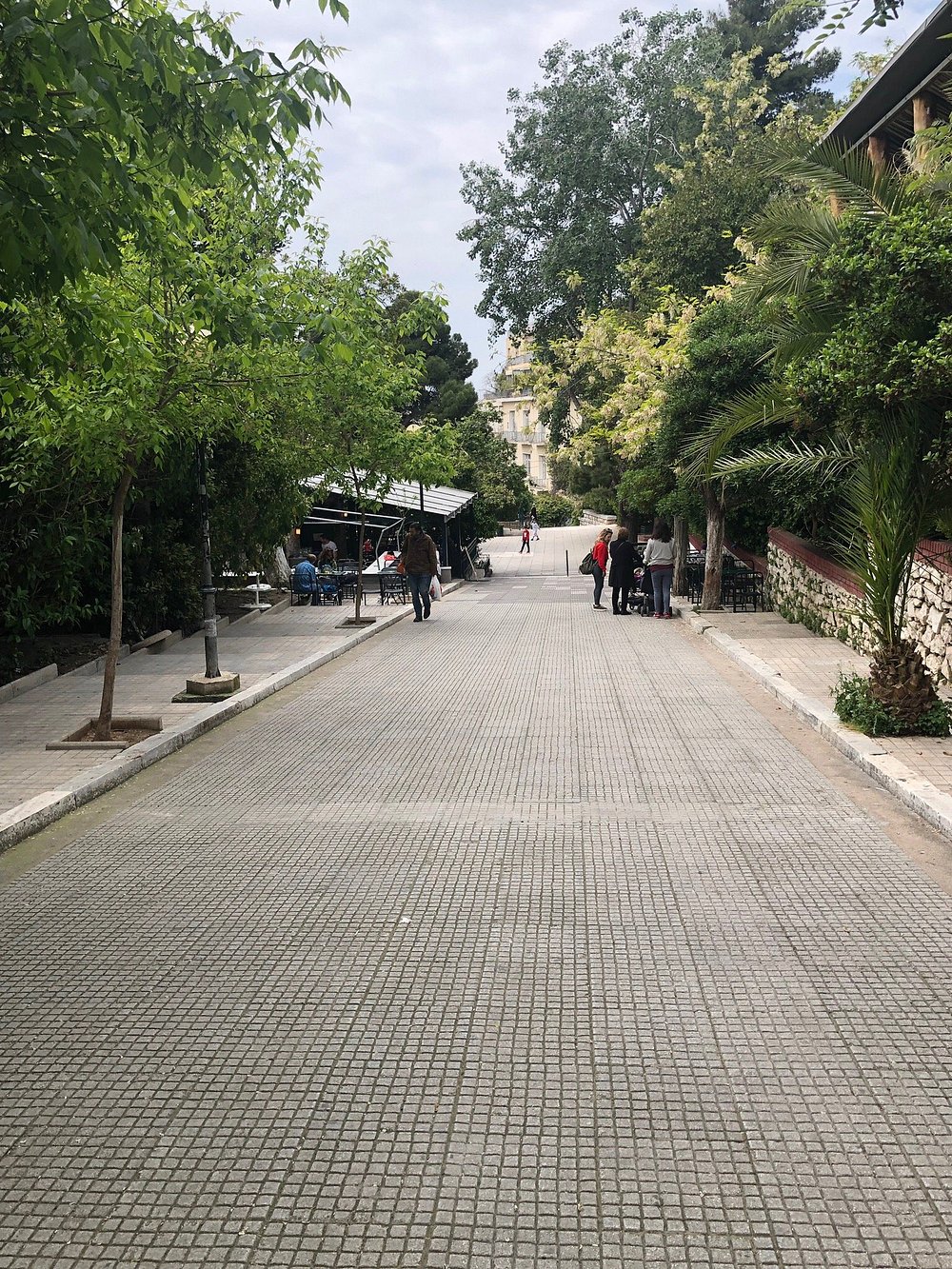
The neighbourhood that was once called Katasikadika — after the goats that grazed on Lycabettus’s lower slopes — has become one of Athens’ most characterful corners. The square itself is compact and unhurried, the kind of place that feels pleasantly resistant to the city’s pace.
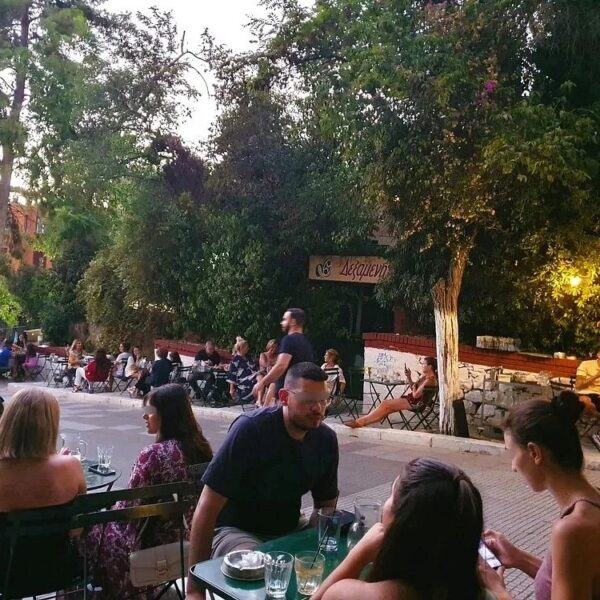
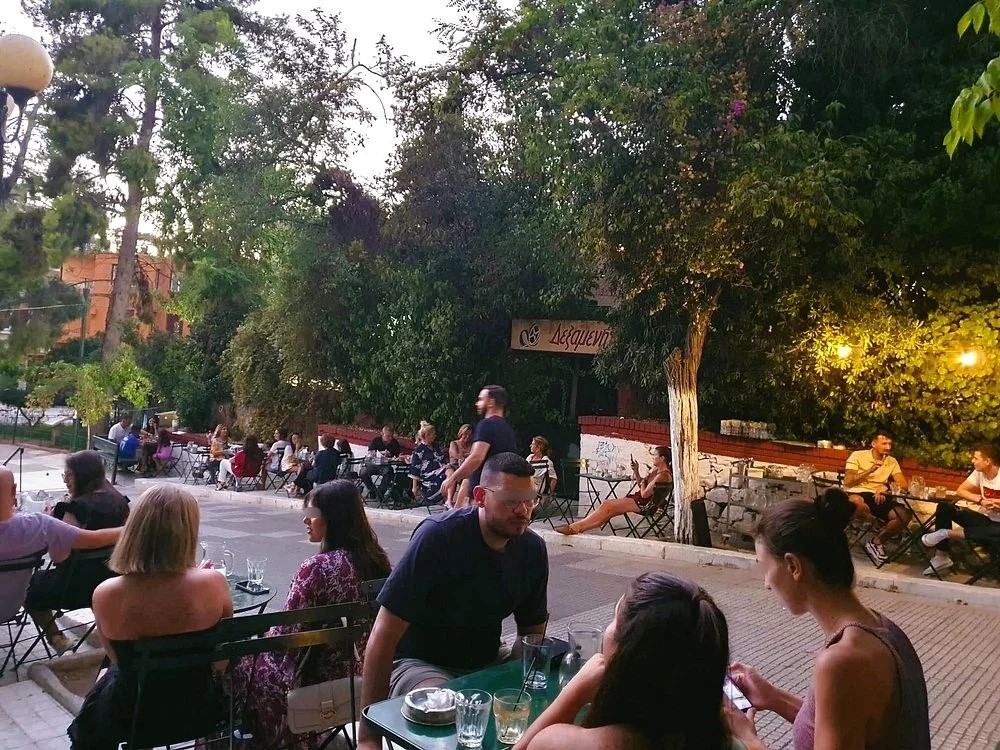
The café-mezedopoleio (the Greek combination of coffee house and small-plates taverna) still anchors the square on the pedestrian street beside the cistern. The menu is short and accomplished — expect a potato salad with smoked trout, broad bean purée with marinated anchovies, perfectly grilled calamari and baked aubergine with cheese. Prices are wonderfully reasonable and the portions are generous. On summer evenings it fills with a cross-section of Athens at its most relaxed: grandparents, students, entrepreneurs on informal meetings and plenty of people who’ve simply made this their weekly ritual.
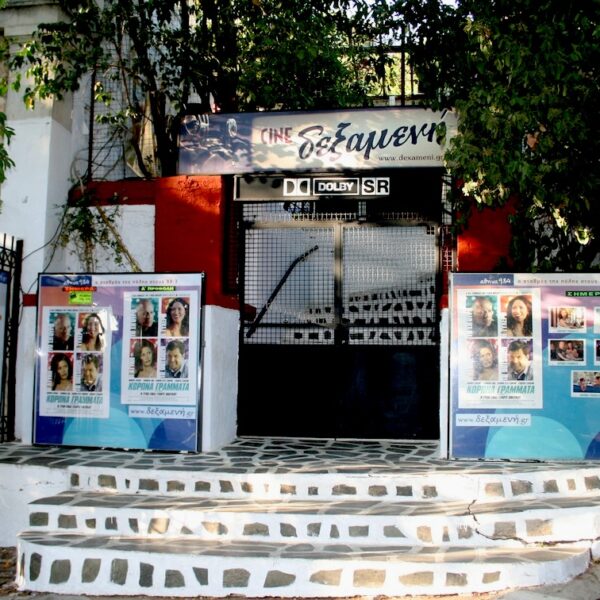
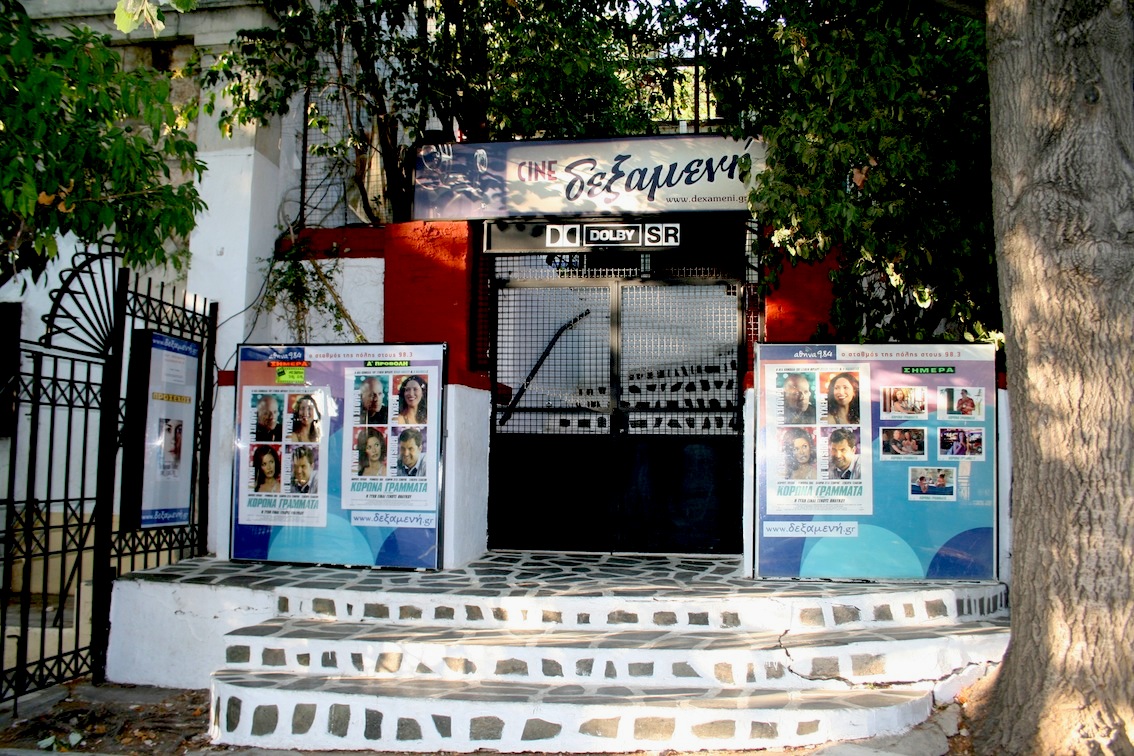
In 1991, the cultural centre of EYDAP (Athens’ water utility, whose connection to the cistern is pleasingly appropriate) converted the cistern’s rooftop into Cine Dexameni, an open-air cinema. It remains one of the most beloved summer cinemas in central Athens, showing a mix of current releases and art-house films under the stars, with Lycabettus rising behind the screen.
A children’s playground completes the picture — making Plateia Dexamenis a genuinely multi generational space, one of the few in the city centre that doesn’t feel like it was designed by committee.
Highlights
Important Information
Getting there
Take the metro to Evangelismos (Line 3) and walk approximately
800 metres toward Kolonaki — around 10–12 minutes on foot.
By car, approach via Vassilissis Sofias, turn onto Irodotou, and head uphill toward Xanthippou Street.
When to Visit
The square is pleasant year-round, but summer evenings are magical — combine a meal at the mezedopoleio with a film at Cine Dexameni.
Arrive early for the best tables
The Cistern
Not open to the public on a regular basis, but the Hadrianic Cistern opens each year on Epiphany (6 January) for the traditional blessing of the waters. Restoration work has been ongoing.
The Aqueduct
The Hadrianic Aqueduct — still carrying water — is a listed monument of historical and cultural heritage. Restoration efforts are underway to open parts of it for public access.